
By NEW CONTRIBUTOR Tam McBean
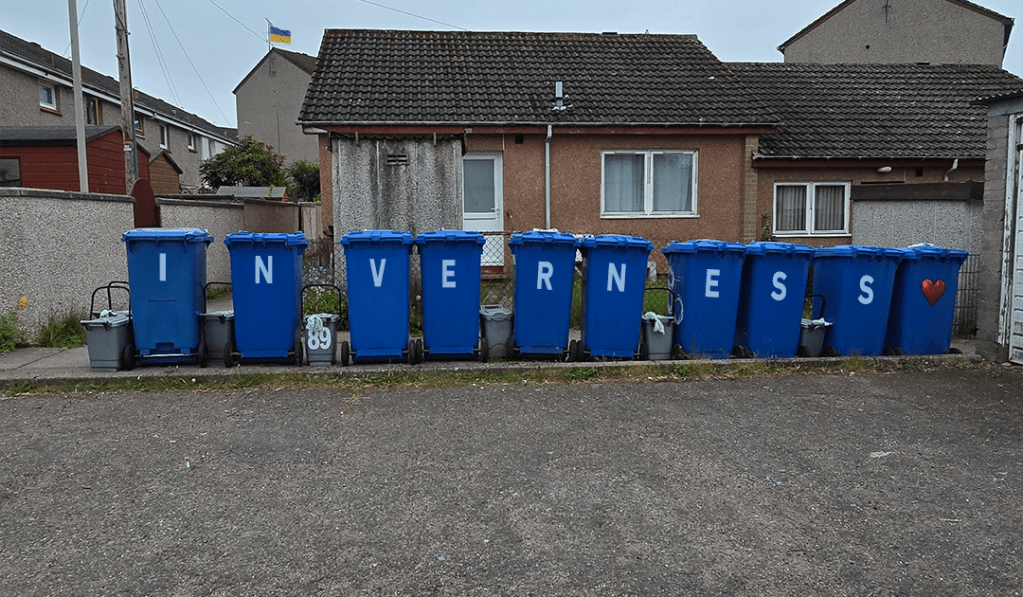
The ITB politburo was meeting, as it does almost uninterruptedly, at the same table in the same bar, and those present had already once again rued their respective misfortunes and noted the smouldering nature of their respective handbaskets, when the question arose as to why anyone would want live in Inverness. A hush descended as if we all knew the bleak road this was likely to set us off upon as so many times before.
It was at this point that our illustrious Ukrainian member for Upper Smithton, returning with an armful of beers, chipped in:
‘Well’, she said, in flawless English, ‘you are probably all aware but have through sheer cynicism forgotten that this town is absolutely unique in the United Kingdom and, let me say, by extension in the world at large. Even the esteemed literary genius Jorge Luis Borges knew that for Pyotr’s sake.’ A note of weary exasperation was detectable.
We paid unusual attention to this, our curious looks offering tacit encouragement to carry on and relieve the suspense.
‘Tak, тобто, іменно, i як-от,’ she pronounced, reminding us of our own linguistic incapacity, ‘this is the one place in the universe where all the strands of Scottish history come together in one essential hotchpotch. What might be termed a scotch broth of Caledonian culture.’
Not pausing for a single second in smug contemplation of this turn of phrase, as I’m afraid each of the rest of us might well have done, she developed her thesis:
‘There are conspicuous and beautiful traces for every era of settlement here, the ancient stone circles of the original indigenous inhabitants, who likely as not are selfsame with the northern Picts, to the landscapes of Celtic Britons from the south west, those pesky Roman interlopers from across the Channel, Northumbrians and Anglo-Saxons from the south, Norse and Danes from across the sea to the East, Icelanders from the north, Irish gaels from the far west, and those even peskier English from the deep south. An incomparably richer stew than the meagre stovies to be found elsewhere in Scotland, no disrespect intended to those other parts. Do any of you even know where so-called Druid Temple is, or ever been there?’
I sensed we all felt the reproach hit home.
‘I tak,’ she continued, ‘one must further add the unique pleistocene geological groundbase of this extensive site of special scientific interest, of which it seems to me the inhabitants are pretty much unaware. For me, from the flat wheatbelt of glorious Ukraine, which by the way is largely covered with watermelons – none of your lowbrow snickering please and thank you – this immoderately fascinating topography is exhilarating. Your erratics are a constant source of wonder. My daughter is at a nursery that has one in the playground. I would wish to have had that in my early years.’
She wiped a nascent tear, composed herself and further expounded: ‘So much history, almost as much as Ukraine ha ha, all cruel and romantic and so on but with local colour, the fighting over cheese a point in case.’
Not a few of us I’m sure felt shame at even contemplating correcting that misplaced idiom since her entire speech was so impassioned and articulate.
‘… and the trees, oh the trees, it is as if what is felled in the Amazon is spontaneously replaced by the forest of multifarious tree species able to grow here. The view across the town from Westhill or from Kinmylies is intensely arboreal.’
She paused, relaxed, looked around at our astonished expressions.
‘I LOVE it here. And so should you!’
What could we do but sit there aghast at this marvelous exposition, pride and humility swelling in each liver, and not a little admiration in each heart for our Kievan rose.
She would not have to buy a round for the foreseeable future ever again.
 Inverness Tourist Board
Leave a comment